

The German Healthcare System/Integration Office for Disabled People – My Experience

This post reflects my personal experience with the German healthcare system as a disabled person living with cerebral palsy. It is not meant to speak for everyone. I know that experiences can vary greatly — even within the same system — depending on circumstances, support, and access to information.
Overall, I’ve been able to get the care and services I need, often with the support of my mom. Along the way, I’ve learned that the system doesn’t always make it clear what you’re entitled to, and that patience, approvals, and self-advocacy are often necessary. Despite this, I truly feel that the German system has given me top-of-the-line equipment and excellent care
I’m sharing this to inform and offer perspective — whether you are disabled yourself or supporting a family member who is, not to complain, and not to generalize, but to add one honest voice to the conversation.
When people talk about Germany, they often say the healthcare system is one of the best in the world, and in many ways, that’s true. Everyone has insurance. No one is supposed to be left behind. On paper, it sounds safe. Reassuring. Almost comforting.
But living inside the system as a disabled person is different than reading about it.
I’ve grown up needing doctors, hospitals, therapies, and specialists. For me, healthcare isn’t something you think about once a year — it’s something that follows you your whole life. And while the German system has helped me many times, it has also shown me how tiring it can be just to exist within it.
Being Covered Doesn’t Always Mean Being Informed
One thing I’ve learned over the years is that the German healthcare system does not always tell you what you are actually authorized to have.
Sometimes you are entitled to something — but no one tells you.
You’re expected to know.
Or to ask the right question.
Or to already be informed.
A good example is things like customizing a vehicle to accommodate a wheelchair. Support for this can exist, but it’s rarely offered openly. If you don’t know it’s possible, you might never apply. That silence can be one of the biggest barriers.
My Personal Experience with Care
I want to be honest here: I can’t really say that I’ve had major issues getting the core medical services I need.
When I needed a new wheelchair, I got one.
When I needed new braces, I got them.
Doctor visits and therapy—even house calls—usually worked out, and prescriptions did too.
For the most part, with time and persistence, they were handled.
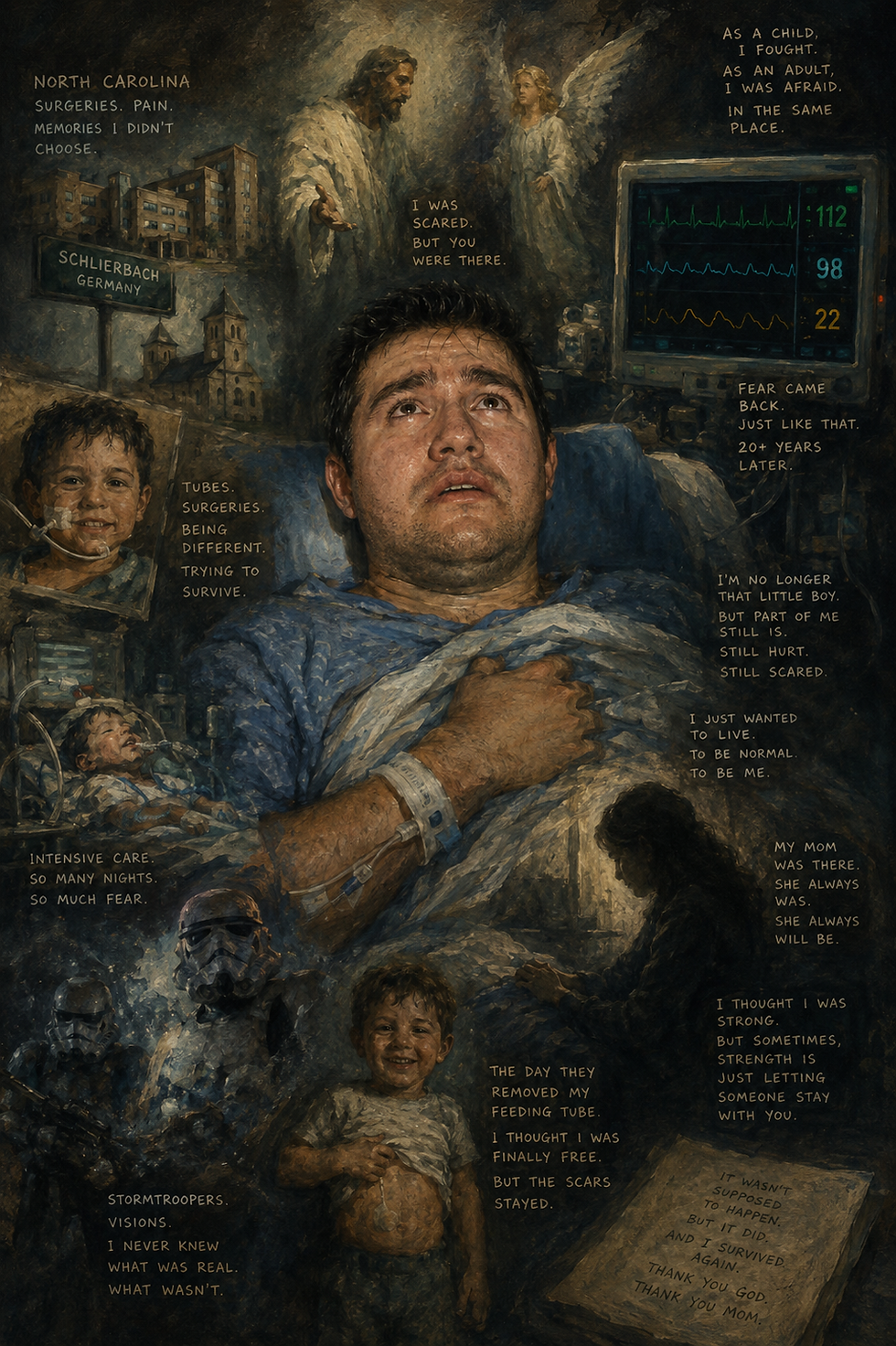
A big reason for that is my mom.
With her support, I usually end up getting what I need. She helps push when things stall, follows up when answers don’t come, and makes sure nothing quietly disappears into bureaucracy. I know not everyone has that kind of support, and I don’t take it lightly.
That doesn’t mean everything is instant. Some things require waiting. Some things need authorization. Some things take time. But overall, I recognize that my experience has been more stable than others’.
Therapy Isn’t a Luxury — It’s Maintenance
Physiotherapy, occupational therapy, rehabilitation — these things keep my body moving. They help slow down stiffness, pain, and decline. They are not about “fixing” me. They’re about maintaining what I have.
Still, therapy comes with limits. A set number of sessions. Then paperwork. Then waiting. Then approval.
Chronic conditions don’t disappear, even when the system pauses.
Accessibility Isn’t Always a Given
Not every doctor’s office is accessible. Not every examination table can be lowered. Not every building considers wheelchairs, fatigue, or physical limits; however, doctors, and therapists provided me with house visits even during the COVID 19 pandemic
You learn to plan ahead.
You learn to ask.
And sometimes, you learn to accept that certain places were simply not built with disabled people in mind.
That realization stays with you.
Mental Health Care and Waiting
Disability isn’t only physical. It affects how you see yourself, how you imagine your future, and how safe you feel in your own body.
Mental health care exists in Germany, but it often involves long waiting times. Finding someone who accepts public insurance and understands disability can take a long time. And during that waiting period, you’re often left alone with thoughts that don’t come with instructions.
Why I’m Writing This
I know that situations can be very different for everyone — even within the same healthcare system. Some people struggle much more. Some people fall through the cracks. Others don’t know what support exists at all.
I’m not writing this to complain, and I’m not writing this to praise the system blindly either.
I’m writing this to inform — whether it’s for disabled people themselves or for family members trying to support someone they love.
The German healthcare system can help, but sometimes, it won’t speak unless you ask, and sometimes, it helps more when you’re not alone.

Das deutsche Gesundheitssystem /Integrationsamt für Menschen mit Behinderung – Meine Erfahrung
Dieser Beitrag spiegelt meine persönliche Erfahrung mit dem deutschen Gesundheitssystem als Mensch mit einer Behinderung und mit Zerebralparese wider. Er soll nicht für alle sprechen. Mir ist bewusst, dass Erfahrungen — selbst innerhalb desselben Systems — stark variieren können, je nach Situation, Unterstützung und Zugang zu Informationen.
Insgesamt konnte ich die Versorgung und Leistungen erhalten, die ich brauche, oft mit der Unterstützung meiner Mutter. Auf diesem Weg habe ich gelernt, dass das System nicht immer klar kommuniziert, worauf man Anspruch hat, und dass Geduld, Genehmigungen und Eigeninitiative häufig notwendig sind. Trotz allem habe ich das Gefühl, dass mir das deutsche System erstklassige Hilfsmittel und eine hervorragende Versorgung ermöglicht hat.
Ich teile diese Erfahrungen, um zu informieren und eine Perspektive zu geben — egal ob man selbst eine Behinderung hat oder ein Familienmitglied unterstützt. Nicht um zu klagen und nicht um zu verallgemeinern, sondern um eine ehrliche Stimme zur Diskussion beizutragen.
Wenn Menschen über Deutschland sprechen, wird das Gesundheitssystem oft als eines der besten der Welt bezeichnet. Und in vielerlei Hinsicht stimmt das auch. Jeder ist versichert. Niemand soll zurückgelassen werden. Auf dem Papier klingt das sicher. Beruhigend. Fast tröstlich.
Doch im System zu leben ist etwas anderes, als nur darüber zu lesen.
Ich bin damit aufgewachsen, Ärzte, Krankenhäuser, Therapien und Fachärzte zu brauchen. Für mich ist das Gesundheitssystem kein Thema, das man einmal im Jahr betrachtet — es begleitet mich mein ganzes Leben. Und obwohl mir das deutsche System oft geholfen hat, hat es mir auch gezeigt, wie anstrengend es sein kann, sich ständig darin zu bewegen.
Versichert zu sein heißt nicht immer, informiert zu sein
Eine Sache, die ich über die Jahre gelernt habe, ist, dass das deutsche Gesundheitssystem einem nicht immer sagt, wozu man eigentlich berechtigt ist.
Manchmal hat man Anspruch auf etwas — aber niemand sagt es einem.
Man soll es wissen.
Oder die richtige Frage stellen.
Oder bereits informiert sein.
Ein gutes Beispiel sind Dinge wie der Umbau eines Fahrzeugs, um es rollstuhlgerecht zu machen. Unterstützung dafür kann es geben, aber sie wird selten offen kommuniziert. Wenn man nicht weiß, dass diese Möglichkeit existiert, stellt man vielleicht nie einen Antrag. Dieses Schweigen kann eine der größten Hürden sein.
Meine persönliche Erfahrung mit der Versorgung
Ich möchte hier ehrlich sein: Ich kann nicht sagen, dass ich große Probleme hatte, die grundlegenden medizinischen Leistungen zu bekommen, die ich brauche.
Als ich einen neuen Rollstuhl brauchte, habe ich einen bekommen.
Als ich neue Schienen brauchte, habe ich sie bekommen.
Arztbesuche, Therapien, Rezepte — das hat größtenteils funktioniert.
Mit Zeit, Geduld und Ausdauer wurden die Dinge geregelt.
Ein großer Grund dafür ist meine Mutter.
Mit ihrer Unterstützung bekomme ich in der Regel das, was ich brauche. Sie bleibt dran, wenn Dinge stocken, fragt nach, wenn Antworten fehlen, und sorgt dafür, dass nichts einfach in der Bürokratie verschwindet. Ich weiß, dass nicht jeder diese Art von Unterstützung hat, und ich nehme das nicht als selbstverständlich.
Das heißt nicht, dass alles sofort geht. Manche Dinge brauchen Wartezeit. Manche Dinge müssen genehmigt werden. Manche dauern länger. Insgesamt weiß ich aber, dass meine Erfahrung stabiler war als die vieler anderer.
Therapie ist kein Luxus — sie ist Erhalt
Physiotherapie, Ergotherapie und Rehabilitation halten meinen Körper in Bewegung. Sie helfen, Steifheit, Schmerzen und Verschlechterung zu verlangsamen. Es geht nicht darum, mich zu „reparieren“. Es geht darum, das zu erhalten, was ich habe.
Trotzdem gibt es Grenzen. Eine bestimmte Anzahl an Sitzungen. Dann Anträge. Dann Warten. Dann Genehmigungen.
Chronische Erkrankungen verschwinden nicht, nur weil das System eine Pause macht.
Barrierefreiheit ist nicht selbstverständlich
Nicht jede Arztpraxis ist barrierefrei. Nicht jede Untersuchungsliege lässt sich absenken. Nicht jedes Gebäude berücksichtigt Rollstühle, Erschöpfung oder körperliche Einschränkungen; dennoch haben mir Ärzte und Therapeut:innen sogar während der COVID-19-Pandemie Hausbesuche angeboten.
Man lernt, vorauszuplanen.
Man lernt, nachzufragen.
Und manchmal lernt man, dass manche Orte einfach nicht für Menschen mit Behinderung gebaut wurden.
Diese Erkenntnis bleibt.
Psychische Gesundheit und das Warten
Behinderung ist nicht nur körperlich. Sie beeinflusst, wie man sich selbst sieht, wie man sich die Zukunft vorstellt und wie sicher man sich im eigenen Körper fühlt.
Psychische Unterstützung gibt es in Deutschland, aber oft mit langen Wartezeiten. Einen Therapieplatz zu finden, der von der Krankenkasse übernommen wird und Verständnis für Behinderung hat, kann sehr lange dauern. Und in dieser Zeit bleibt man oft allein mit Gedanken, für die es keine Formulare gibt.
Warum ich das schreibe
Ich weiß, dass Situationen sehr unterschiedlich sein können — selbst innerhalb desselben Gesundheitssystems. Manche Menschen kämpfen deutlich mehr. Manche fallen durchs Raster. Andere wissen gar nicht, welche Unterstützung es überhaupt gibt.
Ich schreibe das nicht aus Wut.
Und ich schreibe es auch nicht, um das System blind zu loben.
Ich schreibe es, um zu informieren — egal ob für Menschen mit Behinderung selbst oder für Angehörige, die jemanden unterstützen wollen, den sie lieben.
Das deutsche Gesundheitssystem kann helfen.
Aber manchmal spricht es erst, wenn man fragt.
Und manchmal hilft es mehr, wenn man nicht allein ist.


Chris, once again you have written an excellent post about the pros and cons of Germany’s healthcare system, especially as it applies to the disabled. It is balanced and you put a lot of effort into it. Information like this is important as the USA looks into ways of reforming its healthcare system. Well done!
My sweet cousin, thank you for sharing your life experience.